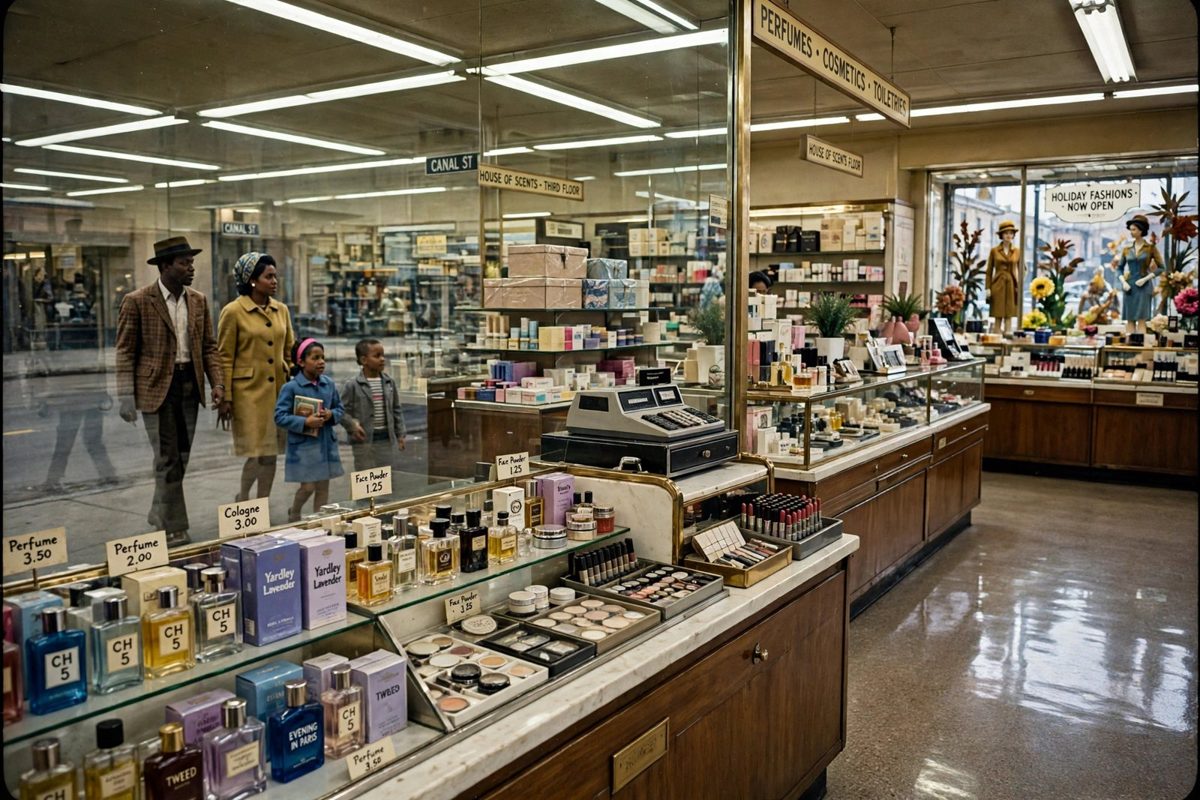
New Orleans, before 1964
The longer walk down Canal StreetWhy Aunt Vic walked past the grandest windows on Canal to buy Communion dresses somewhere else.
A novel in progress
New Orleans, the Clara Street project. One family, five children, and a lifetime of keeping score.
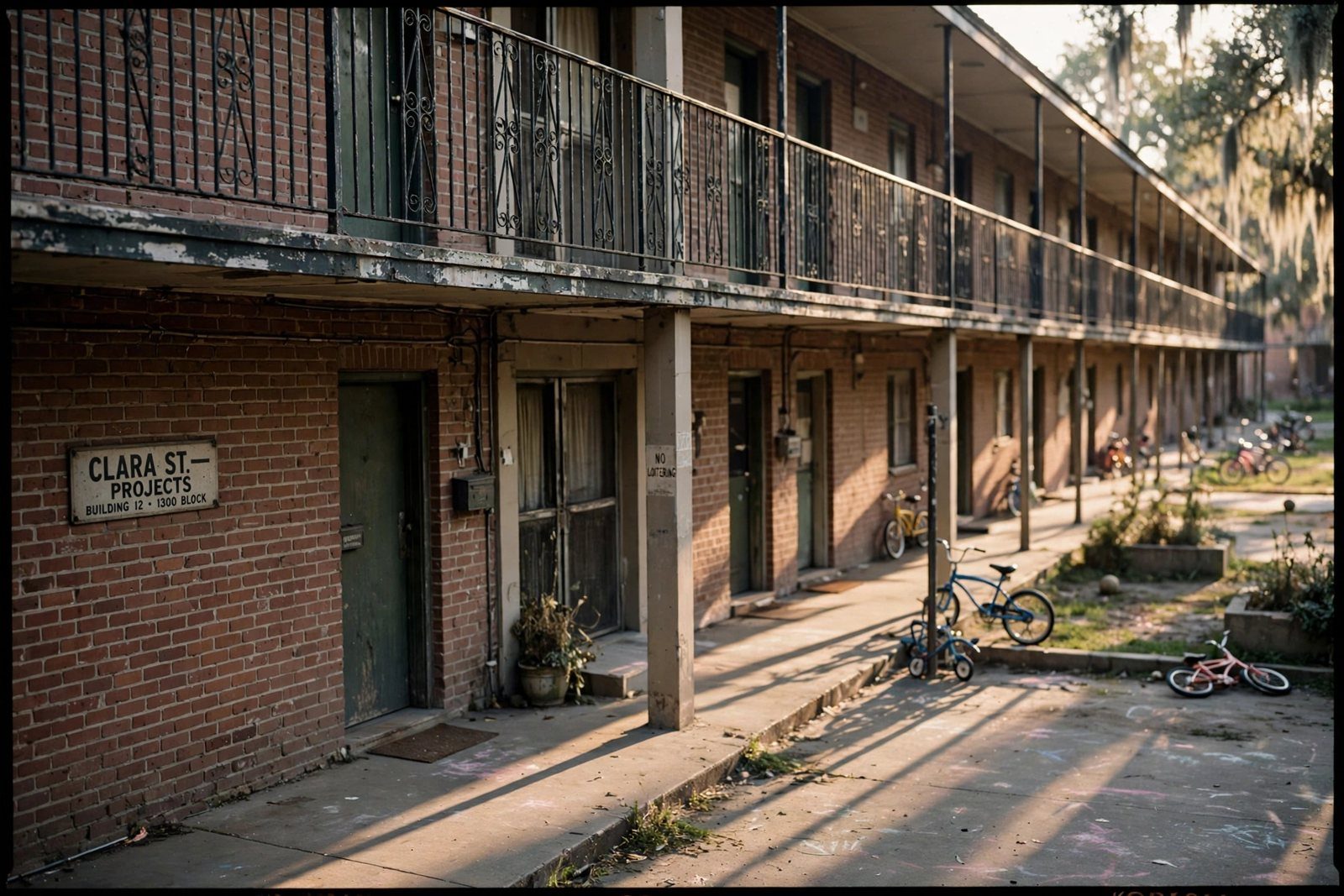
Illustrative recreation of the galleries on Clara Street.
The book
Gloria grows up in the 1950s and '60s in a brick building with an iron gallery on Clara Street, one of five children, with an aunt and uncle close enough that the word cousin hardly needs saying. She is too tall for the family photographs and too different to ever fully disappear into them.
Told by Gloria in her seventies, looking back, What Love Costs follows one New Orleans family from the galleries of the projects to the present day: an aunt who takes the long way down Canal Street rather than ask for less than dignity, a sister who always goes first, a sister who always goes last, and a narrator who is not always telling you everything.
It is a book about the price of love: the love of a child, of a father, of a sister, of yourself. And about who ends up paying it.
"Too tall, too different-colored, too much of something none of the rest of them had."Gloria
Meet Gloria
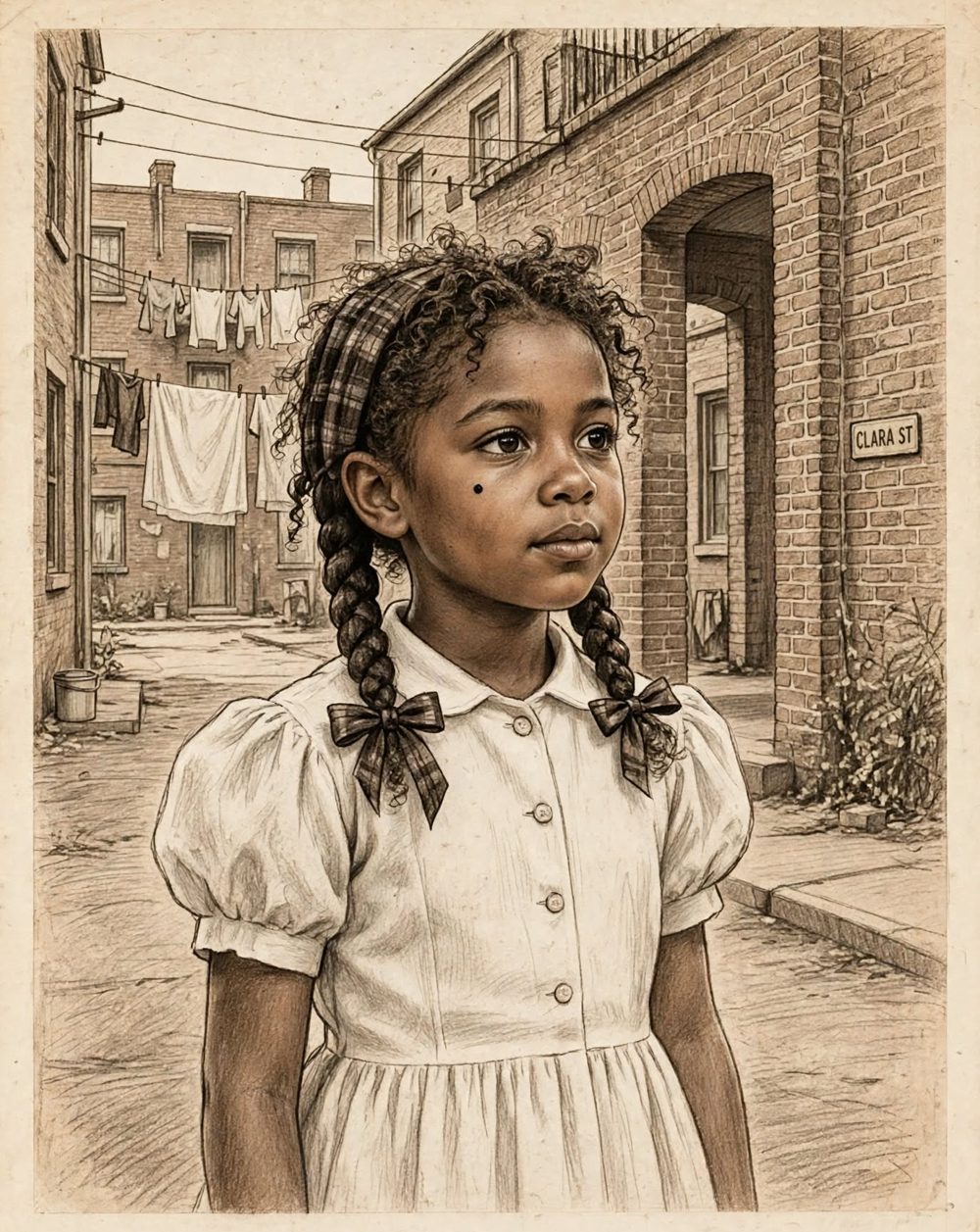
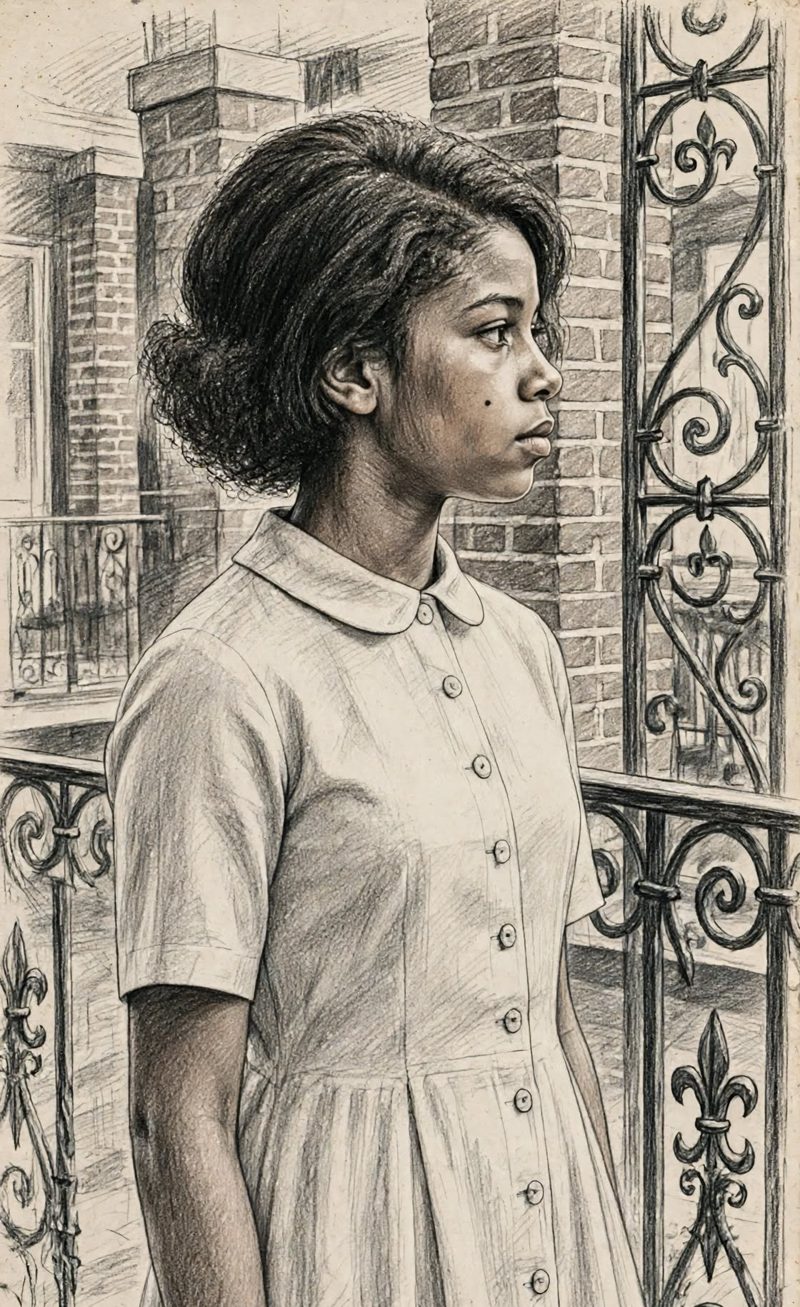
Illustrative sketches made for the book, not photographs of real people.
From Chapter One
The rain came the way it always came in New Orleans, sudden and warm, more insult than storm, gone in twenty minutes but soaked through in two. From the gallery outside our building in the Clara Street project, I could see it starting three doors down, a gray curtain moving up the breezeway toward us like it had somewhere to be.
Delphine, the oldest of the five of us, already had her books wrapped tight in twine and tucked under one arm, the way you carried your schoolbooks before anybody thought to put straps on such a thing, and mine were wrapped the same way, knotted a little crooked because my mother, Corinne, had done mine in a hurry while she was still working Margot's hair into plaits. Uncle Alton drove us to school most mornings it rained, since it was six blocks and none of our raincoats had much life left in them.
"Here he come," Delphine said, not moving from the doorway, like arriving first entitled her to announce everybody else's business too.
"He got a name," my mother hollered from somewhere behind her, not even looking up from whatever she was doing. "Gloria, get up under here before you catch your death," she added, without turning around, already sure I hadn't moved. She was strong on manners that way, stronger than the rest of the house ever quite managed to be. You said Uncle Alton in that apartment, full name and all, or you said nothing at all.
He wasn't blood, not directly, though nobody in that apartment would have let you get away with saying so out loud. He was married to my father's sister, Victoria Elaine, Aunt Vic to every one of us. Their children, Lydia closest to me in age, were our first cousins by that same marriage, though we called each other cousin so rarely it hardly needed saying. We were together too often for the word to carry much weight. Some families you have to explain. Ours, on that side of it anyway, you just lived inside.
Uncle Alton's Buick was parked half on the curb the way it always was, engine running, and he was out of it before the rain reached the gallery, black umbrella already snapped open over his head, moving quick in that unhurried way big men have of not looking like they're hurrying.
He took Delphine first. Always did. She went down the steps under his arm like somebody being presented, chin up, not even glancing back at her sisters waiting their turn. That was Delphine. Even at nine she understood that going first meant something, and she intended to go first at everything for the rest of her life.
I went second. I remember the umbrella smelling like cigars, though Uncle Alton didn't smoke, and I never did figure out where that smell came from. I remember his hand on the crown of my head, gentle, like he was afraid a good grip might dent something. I remember being set down dry in the back seat of the Buick while behind me the rain kept coming down on Clara Street like it had all day to do it.
And I remember turning around.
The rest of Chapter One is with the reading circle. Join below to follow along as the book is written.
Behind the story
New Orleans, before 1964
The longer walk down Canal StreetWhy Aunt Vic walked past the grandest windows on Canal to buy Communion dresses somewhere else.
Notes from the Gallery
Every two weeks, a short letter from the writing of the book: a sneak peek at something new, a little of the real history behind the story, and one question I'd love your answer to.
Public signups open soon. Until then, write to letters@whatlovecosts.com and ask to join.