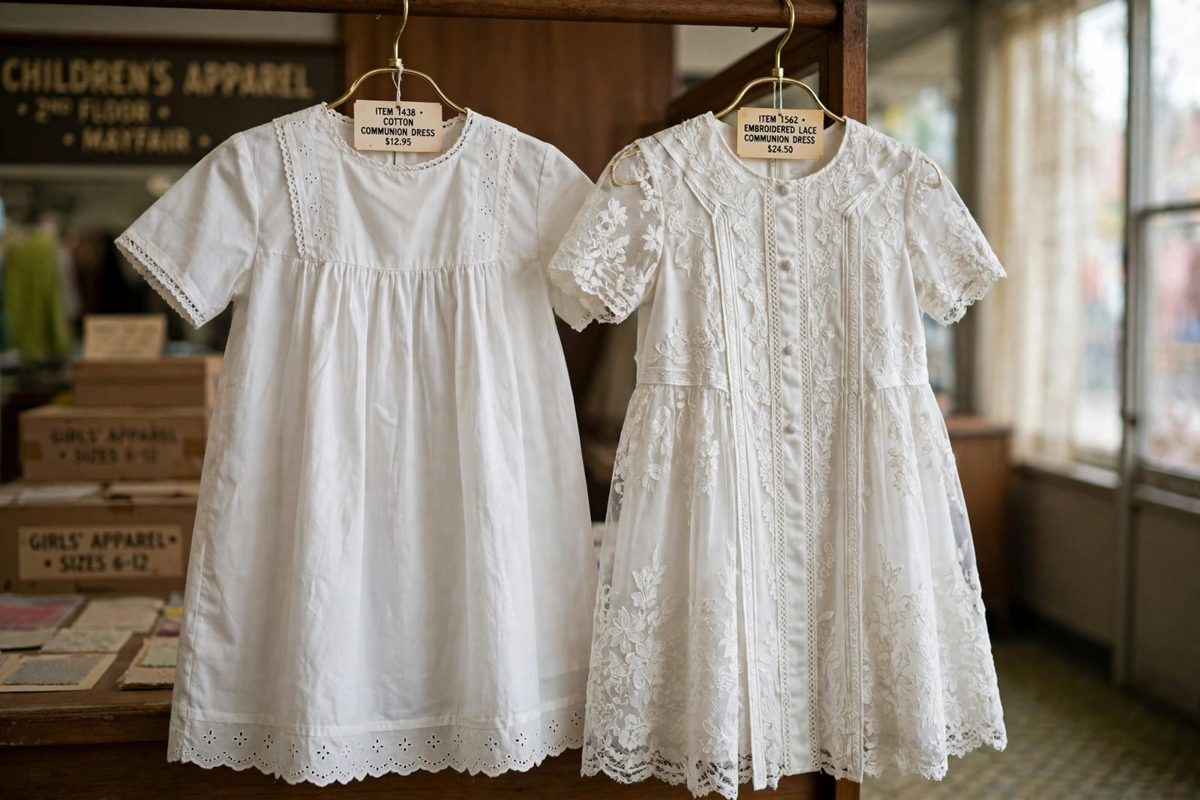
In the spring she turns seven, Gloria and her cousin Lydia make their First Communion together. Their Aunt Vic takes them downtown for dresses, veils and white patent shoes. She does not take them to the store with the grandest windows on Canal Street.
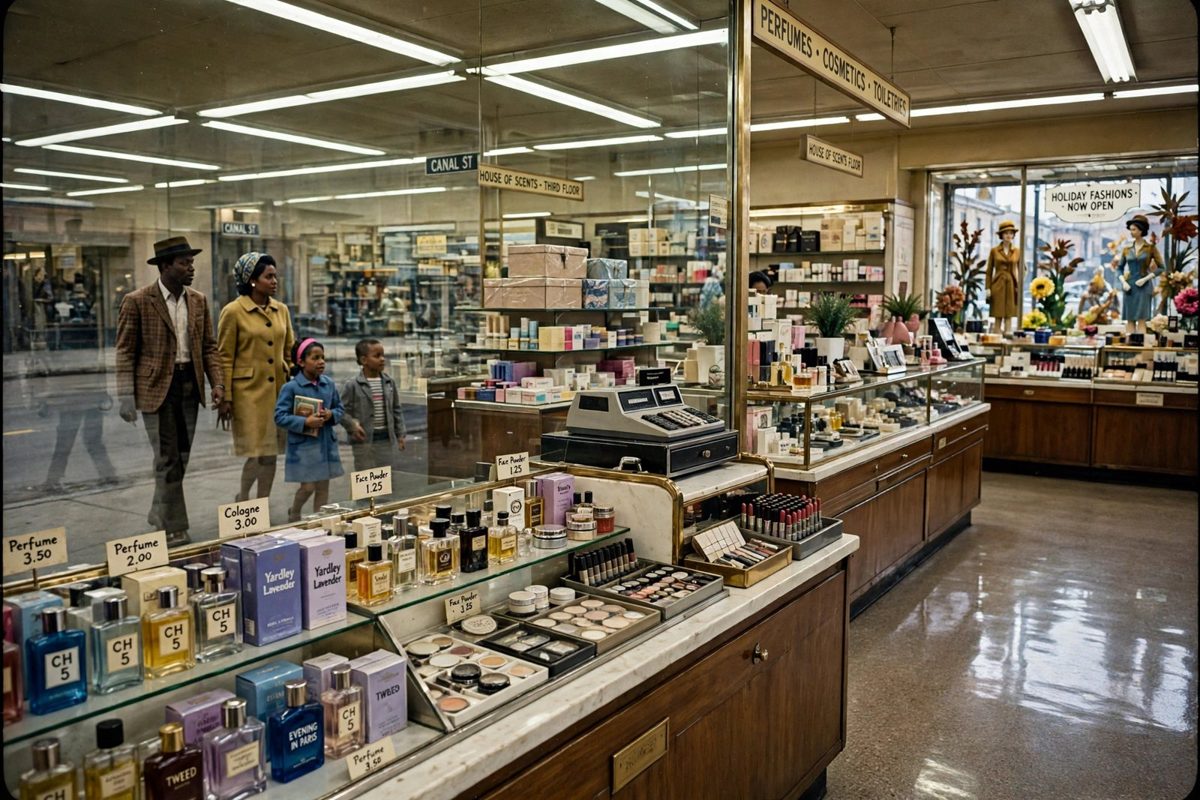
We walked right past Maison Blanche to get there, its windows dressed up grander than anything Krauss ever bothered putting on display, and Aunt Vic never once slowed her step going by it. Colored women could spend their money in that store by 1961, technically, but you couldn't try a thing on before you bought it, not a hat, not a glove, not a dress. Everybody's mother and aunt in this city carried some version of the same story, being told so in front of a line of white customers who didn't have to ask. Krauss never once did us that particular insult. It sat down at the far end of Canal past Basin Street, close enough to Treme that half its regular customers looked like us. Inside it, you could actually put your own two hands on what you meant to buy, which doesn't sound like much until you've been told often enough that you couldn't. I understood, walking past that grander building every single time toward the humbler one, that we were choosing a kind of dignity Canal Street wasn't in the business of handing out for free. The choosing itself cost my aunt nothing more than a longer walk, and she was never once tempted to stop.From Chapter One
What the walk meant
Before the Civil Rights Act of 1964, many of the big Canal Street department stores would take a Black customer's money but would not let her try anything on: not a hat, not a glove, not a dress. Stores closer to the far end of Canal served a mostly Black clientele and let you put your own two hands on what you were buying.
A longer walk to a store that let you try on your own child's Communion dress was a quiet act of dignity, and plenty of New Orleans families made it. Ask almost any Black family from the city who was buying clothes in those years, and someone will have a version of the story.
Your turn
Does your family have a store it wouldn't set foot in, or one it walked the long way to reach? Members of the reading circle can answer in reply to the letter. Their stories shape how this book is written.